
What makes visitors trust a website in the first second
People judge a website almost instantly. What research says about first impressions, and the nine things that make visitors trust a site.
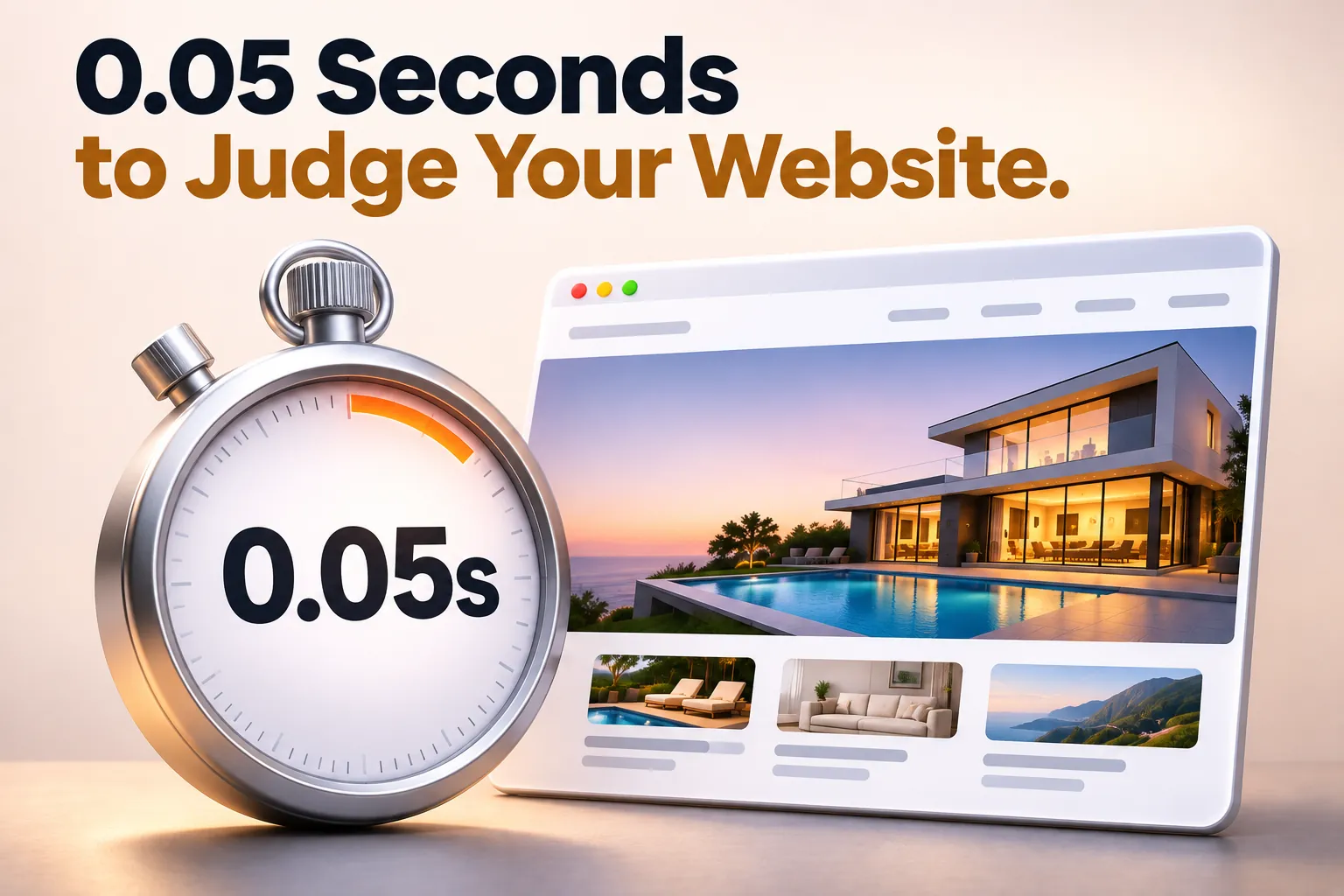
Visitors decide very quickly whether a website looks trustworthy, long before they read what you offer. Research has measured how quickly, and what they judge it on.
Here is what the studies found, and the nine things that make a website feel trustworthy at first sight.
In short
- In a study at Carleton University, people judged a web page’s visual appeal in 50 milliseconds, much as they did with more time.
- In a Stanford study with 2,684 people, the look of a site was mentioned most often when judging its credibility.
- A clear headline, real photos, a tidy design and visible contact details do the most work.
- Speed, readable text and up-to-date details keep that first impression.
- Pop-ups, fake urgency and stock clichés break trust quickly.
What the research says
In 2006, Gitte Lindgaard and colleagues at Carleton University in Canada showed people web pages for 50 milliseconds, a twentieth of a second, and asked them to rate how appealing each one was. Their ratings were remarkably close to those given after looking for longer.
Earlier, the Stanford Web Credibility Project asked 2,684 people to judge real websites and explain why they trusted them or not. The “design look” of the site came up in 46.1% of the comments, more than anything else, including the information itself.
The lesson is not that content does not matter. It is that people decide whether to give your content a chance in the first moment, based on how the page looks.
Nine things that build trust at first sight
- A clear headline that says what you do and for whom, in plain words, at the top.
- Real or honest photos. Your place, your people, your work; never stock clichés that could be anyone.
- A tidy, consistent design. One style, aligned edges, plenty of space, two fonts at most.
- Readable text. Large enough, with strong contrast against the background.
- Speed. A page that appears quickly feels cared for; see why your website is slow.
- Visible contact details. A phone number, an address or a clear way to reach a person.
- Proof you can back up: real reviews, client names, numbers you can show.
- Signs of life. A current copyright year, recent news, no broken links.
- The basics: a secure address (https) and no surprises on arrival.
What breaks trust just as fast
- A pop-up asking for an email address before the page has loaded.
- Fake urgency: countdowns that reset, “only 2 left” that never changes.
- Spelling mistakes in headings.
- Videos or sound that start on their own.
- Different prices or details on different pages.
Try a five-second test
Show your home page to someone who does not know your business for five seconds, then hide it. Ask: what does this business do, who is it for, and would you trust it? If they cannot answer the first two, your headline needs work; if they hesitate on the third, look at the nine points above.
A designer-made starter site takes care of the look from the start: one consistent style, clear headings and room to breathe, so your words and photos get that chance.
Questions
How long do visitors take to judge a website?
Lindgaard’s study found that people rate a page’s visual appeal in about 50 milliseconds, and that this first rating matches the one they give after a longer look.
Does design really matter more than content?
Content decides whether people stay and buy; design decides whether they give it a chance. In the Stanford study, the look of a site was mentioned most often when people judged credibility.
Are stock photos bad for trust?
Obvious stock clichés, such as handshakes and headsets, can make a business feel anonymous. Real photos of your place, people and work do better.
What is the quickest win?
A clear headline that says what you do and for whom, with a real photo and a visible way to contact you.
Sources

Keep reading
Design
7 font pairings that make a website look expensive
Seven font pairings that make a website feel premium, from real designs: where each works, why it looks expensive, and how to use it well.
Design
Colour palettes for 10 industries, from real website designs
Ten website colour palettes, one per industry, from real designs: the four colours of each, why they work and the starter site that uses them.
AI and the web
AI agents are starting to use websites. Is yours ready?
AI assistants now open websites, fill in forms and compare options for people. What they need from your site, and a 10-point check to get ready.