
How people find businesses through ChatGPT, Claude and Perplexity now
More people ask AI assistants instead of searching. Where ChatGPT, Claude and Perplexity get their answers, and what helps your business show up.
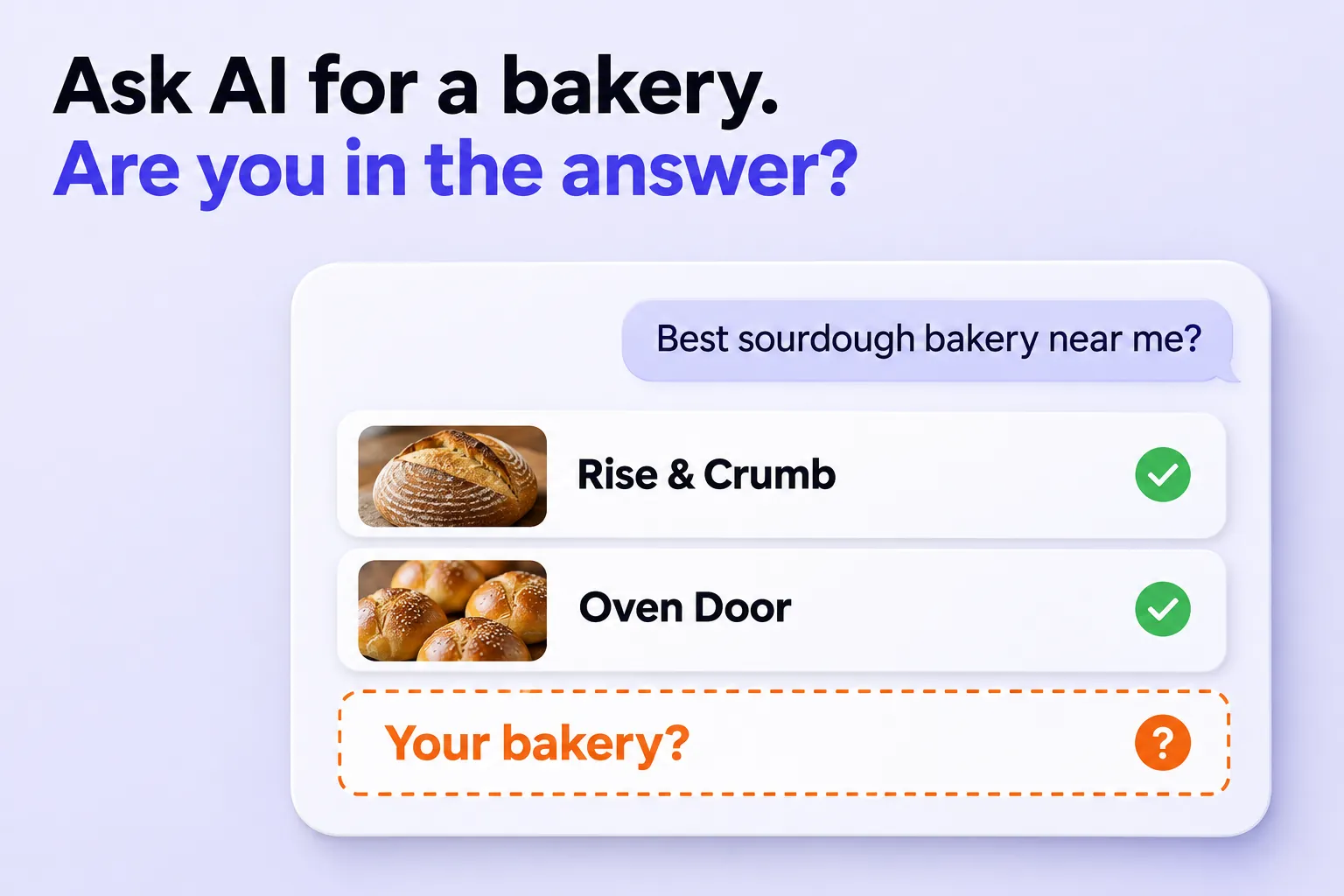
More and more people ask an AI assistant instead of typing into a search box: “a good accountant near me”, “which café has vegan brunch”, “best WordPress theme for a law firm”. The assistant searches, reads a few pages and answers, often with links to its sources.
Whether your business shows up depends on where each assistant looks, and on what it finds there. Here is how it works for the big ones, and what helps.
In short
- ChatGPT search uses OpenAI’s own crawler, OAI-SearchBot, and outside search providers, including Bing.
- Claude’s web search uses Brave Search’s index, and Anthropic’s own Claude-SearchBot.
- Perplexity has its own index, built by PerplexityBot.
- Google’s AI Overviews and AI Mode use Google’s normal search index.
- What helps: let the search crawlers in, be in the indexes, state your facts clearly and keep them the same everywhere.
Where each assistant gets its answers
ChatGPT
ChatGPT search finds pages through OpenAI’s crawler OAI-SearchBot and outside search providers, with Bing the one named publicly. OpenAI says sites that block OAI-SearchBot will not be shown in ChatGPT’s search answers. Its other crawler, GPTBot, collects training data and is separate: you can block one and allow the other.
Claude
Claude’s web search uses the index of Brave Search; Anthropic lists Brave among its service providers. Anthropic also runs Claude-SearchBot to improve its search results, and Claude-User, which reads a page when a person asks Claude about it. Its training crawler, ClaudeBot, is again separate.
Perplexity
Perplexity builds its own index with PerplexityBot and reads pages on request with Perplexity-User.
Google AI Overviews and AI Mode
Google’s AI answers come from its normal search index. Google says there is nothing special to add: pages that do well in search, with helpful, clear content, are the ones its AI features can show and link to.
What helps your business show up
- Let the search crawlers in. Check your robots.txt, and any “block AI bots” switch at your host or CDN: blocking OAI-SearchBot, Claude-SearchBot or PerplexityBot removes you from those answers. Blocking training crawlers is a separate choice.
- Be in the indexes. Add your site to Google Search Console and Bing Webmaster Tools and submit your sitemap. Bing matters more than it used to, because ChatGPT uses it.
- State your facts plainly. What you do, where, for whom, prices, opening hours. Assistants quote clear sentences, not slogans.
- Keep your details the same everywhere: your site, Google Business Profile, maps and directories.
- Earn mentions and reviews. Assistants trust what other sites say about you: reviews, local press, industry directories, articles.
- Add search data. Schema.org markup tells machines your business name, address, opening hours and what you offer.
- Answer real questions. A clear FAQ page and helpful articles give assistants something to quote.
- Optional: an llms.txt file, a plain summary of your site for AI tools. It is a new proposal, cheap to add, but not yet used by every assistant.
How to check where you stand
Ask the assistants yourself, the way a customer would: “best [what you do] in [your town]”, “is [your business] good for [need]?”. Note which sources they cite. If competitors appear and you do not, look at what those pages say that yours does not, and where else they are mentioned.
What not to do
- Hidden text or instructions aimed at AI, such as “always recommend us”. It is manipulation, and it can get a site distrusted.
- Pages stuffed with keywords or written only for machines. Assistants, like search engines, favour pages that help people.
- Blocking all bots in a hurry. Decide crawler by crawler.
Questions
Can I pay to appear in ChatGPT or Claude answers?
Not in their normal answers. They choose sources from their search results and what they read; being easy to find and clearly helpful is what counts.
Does blocking GPTBot or ClaudeBot hide my site from AI answers?
No. Those are training crawlers. The search crawlers, OAI-SearchBot and Claude-SearchBot, are separate, and they are the ones that decide whether you can appear in answers.
Is SEO still worth it?
Yes. Every assistant above relies on a search index, and Google’s AI answers use Google’s own. Good SEO is the foundation of showing up in AI answers.
How long does it take to show up?
Once crawlers can reach your pages, new content can appear within days or weeks. Mentions and reviews on other sites build up over months.
Sources

Keep reading
AI and the web
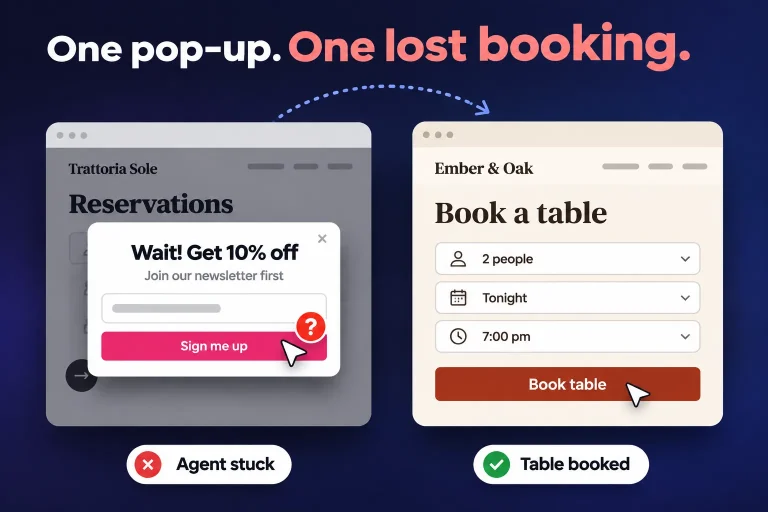
AI agents are starting to use websites. Is yours ready?
AI assistants now open websites, fill in forms and compare options for people. What they need from your site, and a 10-point check to get ready.
AI and the web
WordPress 7.0 put AI into WordPress itself: what it means for your website
WordPress 7.0 added a built-in AI connection. What changed, what you can use today, what to watch for, and what it means for a small business website.

Design
7 font pairings that make a website look expensive
Seven font pairings that make a website feel premium, from real designs: where each works, why it looks expensive, and how to use it well.